I opened my Notes app looking for something else and fell into a folder I'd forgotten existed. Screenshots of tweet threads and YouTube timestamps. Quotes I'd typed out by hand because copy-paste felt too easy. Chapter summaries from books I don't remember finishing. Tips lifted from financial authors, half credited, half not. A checklist I must have copied from somewhere in 2019, half the boxes checked, the other half abandoned mid-scroll. Ten years of financial advice from every corner of the internet, saved by a version of me who was clearly worried he'd forget it.
He was right to worry. Most of it, I had forgotten. But reading through the whole folder in one sitting did something I didn't expect, it showed me which ideas actually survived contact with a real decade of decisions, and which ones were just words I liked the sound of at the time.
Roughly, the folder breaks into four eras:
- 2016–2018, survival-mode notes. Debt, budgets, an emergency fund I didn't have yet.
- 2019–2020, the "secrets to wealth" phase. Thread screenshots, numbered lists, borrowed vocabulary.
- 2021–2022, book highlights. Housel, Naval, a lot of half-finished chapter notes.
- 2023–2026, fewer new saves, more rereading the same ten lines.
Why I kept saving this stuff
I started that folder around the same time I joined a crypto-fintech startup as one of its first employees. No playbook, no senior mentor in the building, and a front-row seat to how fast money moves when nobody's watching closely. I was learning marketing technology and personal finance on the same nights, off the same phone, mostly because I couldn't afford to be bad at either.
So I saved things. Book highlights, Quora answers, tweet threads from people further along than I was. Not because I had a system for it (I didn't, not yet) but because some sentence would land on a Tuesday night and I'd think, I need this later, and screenshot it before I could talk myself out of it.

The list that never left the top of the folder
One note stayed pinned above everything else for years, a short list I'd apparently written for myself as financial goals, back when the goals were still further away than the debt was. Stripped of the original wording, it came down to eleven things: put God first, get rid of debt, build an emergency fund, save on purpose, live on a budget, invest consistently, build more than one income stream, spend wisely, live below your means, give generously, and be content with where you actually are.
"goals, god first. no debt. emerg fund. budget!! invest not save. 2+ income. spend on purpose." That's roughly it, half-abbreviated, no punctuation to speak of. I was clearly typing faster than I was thinking.
Eleven items looks like a lot until you notice they're really three ideas wearing different clothes. Stop the bleeding (debt, budget, emergency fund). Make the money work without you (invest, multiple streams). Don't let the money become the point (generosity, contentment, God first). Everything else on that list is a tactic in service of one of those three.
I didn't see that structure ten years ago. I saw eleven separate chores. It took actually living through a few of them, paying off the last of a personal loan, watching a month where one of my own sites' automation earned more than I did that week, to understand they were never eleven things. They're one belief, said eleven ways: money behaves like every other system I've built, it rewards the boring input repeated, not the clever move done once.
The "secrets to wealth" thread that wasn't actually secret
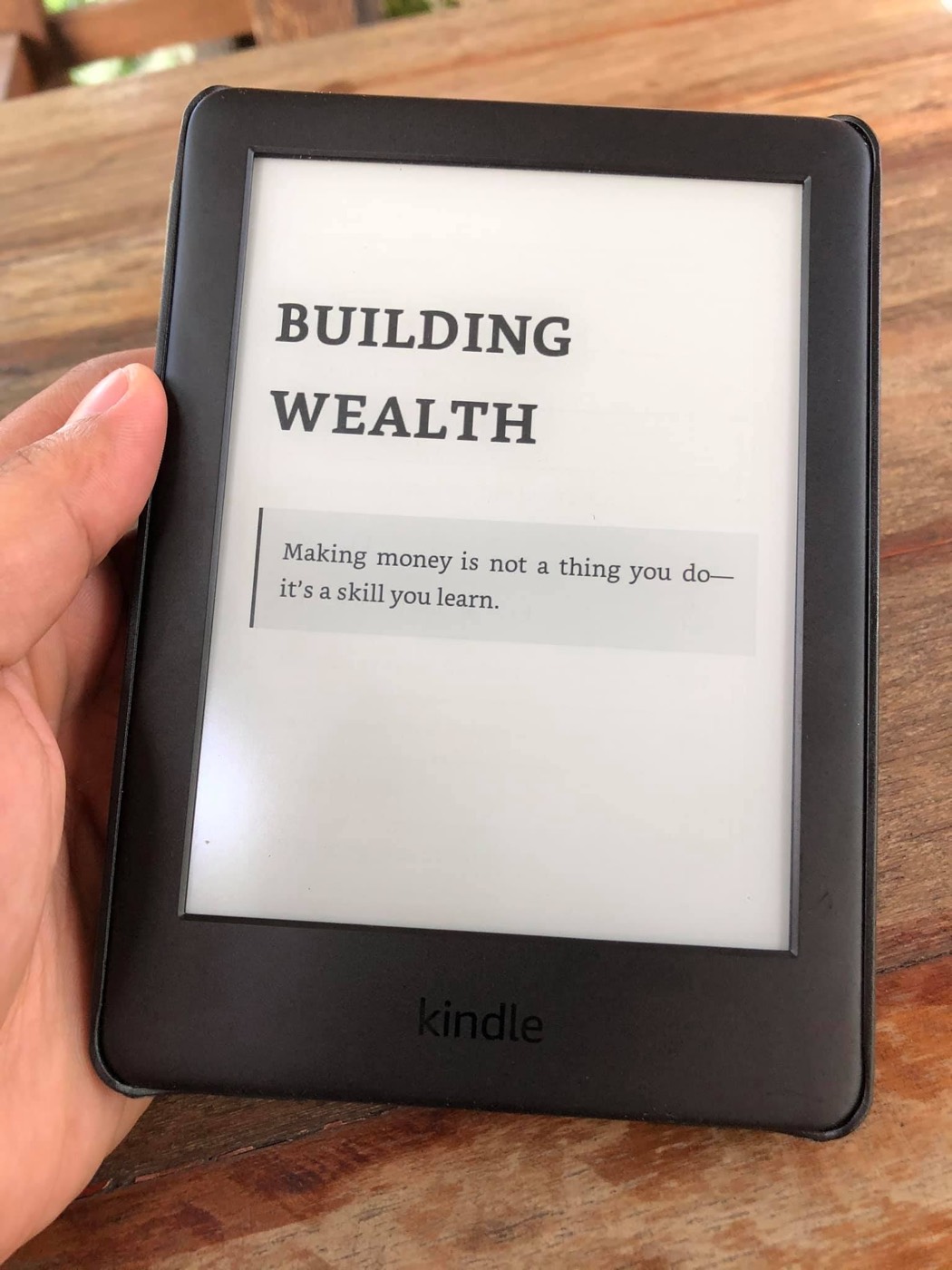
Buried a few screenshots down was a long thread, thirty-something numbered points, titled something like "secrets to wealth (that aren't really secrets)." Re-reading it now, the title undersold itself. None of it was secret. All of it was just expensive to actually do.
The thread's real argument, once I stripped the numbering: your income is a skill stack, not a job title. Learn a handful of technical skills and a handful of people skills, and stop treating "get a degree, get a job" as the finish line, it's closer to the entry fee. Read constantly, because the vocabulary of money (assets, leverage, compounding, cash flow) is a second language, and nobody's born fluent. Buy things that pay you, not things that just look like you're doing well. And take calculated risk on purpose, because the alternative isn't safety, it's just a different, quieter risk that shows up later as regret.
That last one matters more in 2026 than it did when I first saved the thread. AI has moved from a productivity tool to something that's quietly restructuring which jobs even exist, entry-level knowledge work is the first layer getting compressed, and "wait for it to blow over" isn't a strategy anymore, it's a bet. The thread's oldest point, learn skills that compound, not a title that depends on someone else keeping the org chart the same shape, reads less like ambition now and more like basic maintenance.
What the books actually added
Close to a dozen books show up across the folder in one form or another, and rereading my own highlights against the source material years later is a decent way to find out which lessons were real and which ones I just liked as sentences.
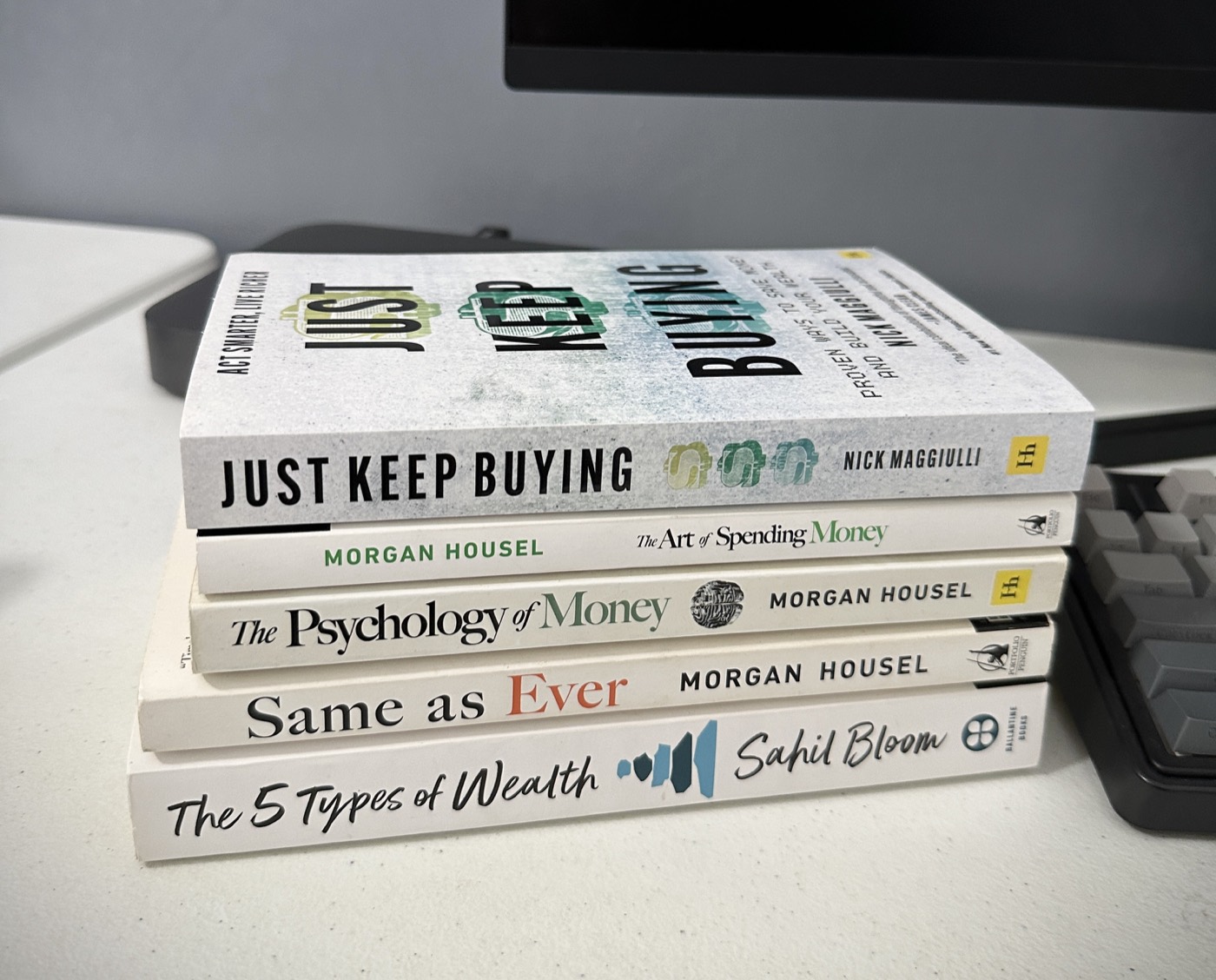
Morgan Housel's The Psychology of Money is the one that changed how I think about the whole subject, not just what I do with it. His core claim, that doing well with money is a soft skill, closer to psychology than physics, matched something I'd already learned the hard way in marketing: the spreadsheet is never the whole decision. People invest, spend, and save based on the story they tell themselves about money, shaped by whatever decade and household taught them to fear or trust it. I stopped assuming other people's money decisions were dumb once I accepted mine weren't purely rational either.
The idea from that book I actually use, weekly: wealth is what you don't see. The car, the watch, the trip, that's rich, a current income on display. Wealth is the option not yet taken, the upgrade you skipped, sitting quietly in an account not performing for anybody. I run five properties that mostly look boring from the outside for exactly this reason. Boring compounds. Impressive rarely does.
I liked that book enough to read Housel's other two. Same as Ever argues you should stop trying to predict the next crypto cycle or AI news cycle and instead plan around what never changes: people panic, people get greedy, people overestimate what a good year says about their own skill. I read it during a stretch in 2025 when every feed was either "AI replaces everyone" or "AI changes nothing," and the book's actual usefulness was giving me permission to stop having a hot take on either and just keep building. The Art of Spending Money is the newer one, and it's the one I needed more, honestly, because I'm better at not spending than at spending on purpose. He makes the case that after you've handled the basics, spending well is its own skill, and most people who are good at saving never bother to learn it. I'm still working on that half.
Naval Ravikant's Almanack gave me the sentence I've repeated to more people than any other piece of advice I've ever passed on: productize yourself. Package what you uniquely know how to do into something that works without renting out your literal hours. That line is the reason my own content pipelines run on agents and workflows instead of me personally writing every page, I took my own advice from a book I read half a decade before I had a business to apply it to.
Charlie Munger's Poor Charlie's Almanack is the densest book in the folder and the one I've finished the fewest times, because it's less a finance book than a manual for thinking clearly, and I keep needing to reread the same page. His idea of a "latticework of mental models" (borrow the useful parts of psychology, economics, biology, instead of staying loyal to one lens) is the same move I make when I steal a metric from marketing to explain a training block, or a training principle to explain a budget. Munger's inversion trick stuck hardest: instead of asking how to succeed, ask how you'd guarantee failure, then avoid doing that. Cheaper lesson than learning it live.
Thomas Stanley's The Millionaire Next Door is the book that first put numbers behind the "wealth is what you don't see" idea, years before I read Housel's version of it. Stanley's actual millionaires drove older cars and lived in the same house for decades, while the people leasing the flashy ones were often one bad month from a real problem. I'd assumed, growing up, that looking rich and being rich were the same thing. That book was the first one to bluntly tell me they're often inversely related, and I believed it a little more each year I watched it play out around me.
Sahil Bloom's The 5 Types of Wealth is the one that widened the whole conversation past money, splitting wealth into time, social, mental, physical, and financial. I'd already been living that split without a name for it: the training and the faith and the family time on the About page of this site aren't a break from the financial goals, they're the other four types of wealth the goals list never mentioned. Reading his version just gave me language for something the folder had been quietly organizing itself around for years.
Bill Perkins' Die with Zero is the book that argued with the rest of the folder, and I mean that as a compliment. Its whole premise, that dying with a large unspent balance is a memory you failed to buy, not a win, sat uncomfortably next to eleven years of "save diligently" notes. I don't fully agree with the extreme version of it. But it's the correction I needed against a real tendency in me to treat saving as the goal instead of the tool, and I've spent more deliberately since, on trips and time with people, not just things.
Nick Maggiulli's Just Keep Buying is the book-length version of the lesson my micro-cap fund mistake taught me the expensive way: consistent, boring, scheduled investing in broad assets beats trying to time anything. His data-first case for buying on a schedule regardless of what the market did last week is the same argument I'd make for a content pipeline that publishes on a schedule regardless of whether I feel inspired that day. Automate the discipline, remove the mood from the decision.
Ramit Sethi's I Will Teach You to Be Rich is the most tactical book in the folder, and the one that actually got me to automate percentages out of every payment instead of just intending to. His "conscious spending plan" is really the same idea as everything else here, decide once, let the system run, and stop relitigating the decision every payday. I resisted the title for a long time because it sounded like a pitch. The advice underneath it wasn't.
Dave Ramsey's The Total Money Makeover is the odd one out, because I don't agree with all of it anymore, and I read most of it right before and during the pandemic, when a literal numbered checklist (his "baby steps") was exactly the kind of certainty I wanted in a genuinely uncertain year. I've since made peace with using debt as a tool rather than treating all of it as an enemy, which puts me at odds with Ramsey's harder line. But the book's real gift wasn't the specific rules. It was proving to me that I respond better to a literal checklist than to a vague principle, which is a fact about how I operate that's shown up in how I build everything since, including the actual checklist this post started from.
John Bogle's The Little Book of Common Sense Investing is the one I wish I'd read before the micro-cap fund, not after. His argument that most active funds can't beat a plain index fund once you account for fees, and that the fee is the one variable you actually control, would've saved me eighteen months and a fair amount of ego. I hold mostly index funds now. Not because I stopped finding other things interesting, but because Bogle's math on fees compounding against you was harder to argue with than any pitch that followed it.
Last on the list, and the oldest by a few thousand years: Proverbs, Ecclesiastes, and Job. Not one book, but the folder treats them like one long-running finance column. Proverbs is mostly tactical, work diligently, don't cosign debt you can't cover, plan seasons ahead the way a farmer stores grain before winter. Ecclesiastes is the corrective for anyone who nails the tactics and still feels empty, its whole argument is that wealth without contentment is "chasing the wind," which is a more honest description of my micro-cap fund than anything I wrote about it above. Job is the hardest one, because it's not a strategy at all, it's the account of a wealthy man who lost everything and had to separate his identity from his balance sheet in real time. I didn't go through anything close to that. But rereading it is the fastest way I know to remember that money was always a tool being tested, not the score.
The part that's timeless, and the part that isn't
Reading a decade of saved advice back to back makes the split between timeless and trendy obvious in a way that reading it in real time never does.
The timeless half hasn't moved an inch: spend less than you earn, let compounding run longer than feels comfortable, keep an emergency fund so a bad month doesn't become a bad five years, don't confuse a bull market with your own skill. Ecclesiastes 11:2, spread what you have across more than one place, because you don't know what's coming, is a few thousand years old and describes diversification better than most finance textbooks manage in a chapter. None of that dated. None of it needed updating for 2026.
The part that didn't age well is anything tied to a specific instrument or era's assumptions, a note about a savings account rate, a screenshot from a bull run that treated 30% annual returns as ordinary. Markets moved. Crypto had a decade of both getting rich and getting wiped out in the same folder of advice, sometimes from the same accounts, a year apart. The principle underneath survived, staying wealthy is harder than getting wealthy, and it runs on paranoia and patience, not on the trade that made you money last time. The specific asset never was the lesson. I just needed a decade to see past it.
What I quietly stopped doing
Not every saved idea survived. The folder also works as a record of what I tried and dropped, which is the part I'd have skipped writing about five years ago out of pride.
I chased a micro-cap mutual fund for about eighteen months because a screenshot promised the kind of returns that double your money every three years. It didn't crash, exactly, it just underperformed a boring index fund I could've bought for a fraction of the fee, and I sold at roughly breakeven once I did the actual math instead of the story. I tried day trading for one genuinely embarrassing month during a run I now recognize as a bull market mistaking itself for skill. I broke even there too, which in hindsight was the expensive lesson landing as cheaply as it possibly could have.
Somewhere in the same folder: "don't chase returns, chase process." Saved in 2019. Ignored in 2021. Re-learned the expensive way in 2022. The advice was never missing. I just wasn't ready to believe it yet.
The pattern in both cases: I was optimizing for a return, when the actual missing piece was a process I could repeat without flinching. Once I stopped hunting for the trade and started automating the boring 20% (the percentage that leaves my account before I can talk myself out of it) the folder stopped filling up with new trading tips and started filling up with better questions instead.
How this actually shows up in my career and my running
I didn't build my own sites, or the agent systems behind them, because I'm a natural systems thinker who happened to discover finance advice on the side. It ran the other way. The Notes app folder taught me the shape first (small inputs, repeated without drama, compounding past the point where anyone's watching) and then I noticed the same shape everywhere else I looked. Content pipelines. Localization at scale. Training four to five days a week for going on five years now.
A campaign is a bet that this month's effort pays off this month. A system is a bet that effort from two years ago is still paying you today, quietly, without a follow-up meeting. Every item on that eleven-line financial goals note is really just asking: are you building a campaign with your money, or a system? Debt is a campaign against your future self. An emergency fund is a system that pays out exactly once, on the worst possible day, and is worth every unglamorous month it sat there doing nothing else.
Running taught me the same lesson before I could explain it in business terms. Nobody wins a race in the race. They win it in the eighteen weeks of unremarkable Tuesday runs nobody photographed. Money works on the identical schedule. The dividend doesn't land on the day you decided to invest. It lands years later, for a decision nobody was there to see you make.
Where faith actually fits into a finance post
"Put God first" sat at the top of that original list, and it would've been easy to skip it here to keep this post cleaner. I'm leaving it in because pretending it wasn't the actual first line would be rewriting my own history to sound more secular than it was.
What it meant in practice was narrower than it sounds: give first, before optimizing the rest of the budget around it. Treat contentment as a discipline you build, not a mood you wait for, Philippians 4:11 was the verse taped, mentally, above most of my early budgeting mistakes. And hold the money loosely enough that losing some of it doesn't cost me my footing, because it was never supposed to be the foundation in the first place. Generosity turned out to be a financial habit, not a spiritual bonus round bolted onto the real plan. It's on the list for the same reason budgeting is, because habits compound, and I'd rather compound in that direction.
What actually made the cut
Ten years of saves, sorted by what survived contact with real decisions:
| From the folder | The original note (brief) | Still true today |
|---|---|---|
| Debt & emergency fund | "kill debt, build the cushion first" | Yes, unchanged |
| "Secrets to wealth" thread | skills stack > job title | Yes, more true post-AI |
| Micro-cap fund tip | "20-30% returns, easy" | No, quietly dropped |
| Housel's "wealth is unseen" | own assets, skip the display | Yes, still my default |
| A specific savings-rate screenshot | a number tied to one era's rates | Half, principle stayed, number didn't |
Key takeaways
- An eleven-point goals list is usually three real ideas: stop the bleeding, make the money work without you, don't let it become the point.
- "Secrets to wealth" are never secret. They're just expensive to actually practice for a decade straight.
- Books don't teach you something new as often as they hand you a sentence for something you already half-knew.
- Wealth is what you don't see. Rich is what gets photographed. Aim for the first one.
- Anything tied to a specific market or rate ages out. Anything tied to human behavior (patience, restraint, generosity) doesn't.
- A financial goal is really just asking whether you're running a campaign or building a system. Build the system.
What I'll do next
I'm keeping the folder, and I'm going to reread it every year instead of forgetting it exists for another ten. Some of what's in there is dated enough to retire on purpose instead of by accident. The core three ideas underneath it aren't going anywhere, so neither is the folder.
Building the financial or business system that runs without you?
Same principle, different domain. I design the workflows and automation that let a business compound quietly, the way a good financial habit does.
Get in touch →Want this built for your team?
I design AI agents and growth automation that run without babysitting. If that sounds useful, let's talk.
Get in touch →