I build systems, not campaigns.
I'm John, a generalist operator from the Philippines, working remotely with teams worldwide. I bet on a simple idea: the future of work is less about doing, more about designing the thing that does it.
Most people use AI to write a few emails faster. I build autonomous agents that run the whole growth engine, then I get out of the way.
I've never fit one title. Marketer, builder, community organizer, operator, over the years I collected skills the way a runner stacks easy miles, not knowing which ones would matter, trusting that range compounds. It does. The breadth is the moat now: I can see the whole system because I've stood in most parts of it.
One question has run underneath all of it: how much of this can run without me? That question turned into a career. Everything I build now is an answer to it.
Right now I run TipidNation, an AI-native affiliate platform in the Philippines. I built the content pipelines, the multi-country localization, and the agentic research behind it. The automated content system cut manual creation by about 80%, and the localization layer ships pages across 80+ markets.
Before that I led marketing technology at Celsius (2017–2022), a global crypto-fintech platform reaching millions of users. I built the CRM infrastructure, the segmentation, and the paid acquisition systems. Earlier, I started WebGeek, one of the Philippines' largest tech communities.
I was born in 1989, which means my teenage years lined up almost exactly with the web's, dial-up, then broadband, then every business suddenly needing a website. I started building them professionally in 2007, more out of curiosity than a plan, and ended up on well over a hundred projects across the next decade: websites, mobile apps, online communities, for clients in Australia, Canada, the US, and the UK. Nobody assigned me that range. I just said yes to whatever came next and learned the rest on the job.
WebGeek started in 2009 as a side project, no funding, no team, just me writing about tech because nobody in Manila was doing it well yet. The first real test was the Web and IT Summit that same year: three days, around 500 people, more than I knew what to do with at the time. Meetups, workshops, and a hackathon called DevCup followed, along with a few award-finalist nods along the way that mattered more to me then than they would now. It grew into one of the country's largest developer communities, eventually partnered with Microsoft, GitHub, Accenture, Smart, and Globe. Nobody taught me community building. I learned it by doing it badly first, for years, until it wasn't bad anymore.
Celsius ended in a restructuring bankruptcy, and I was part of the team let go, years of building a platform that reached millions of users, closed out by a memo. It stung. It's also where the real lesson landed: the system outlives the campaign, and sometimes it outlives the company that built it. That's the point I stopped building other people's infrastructure and started building my own.
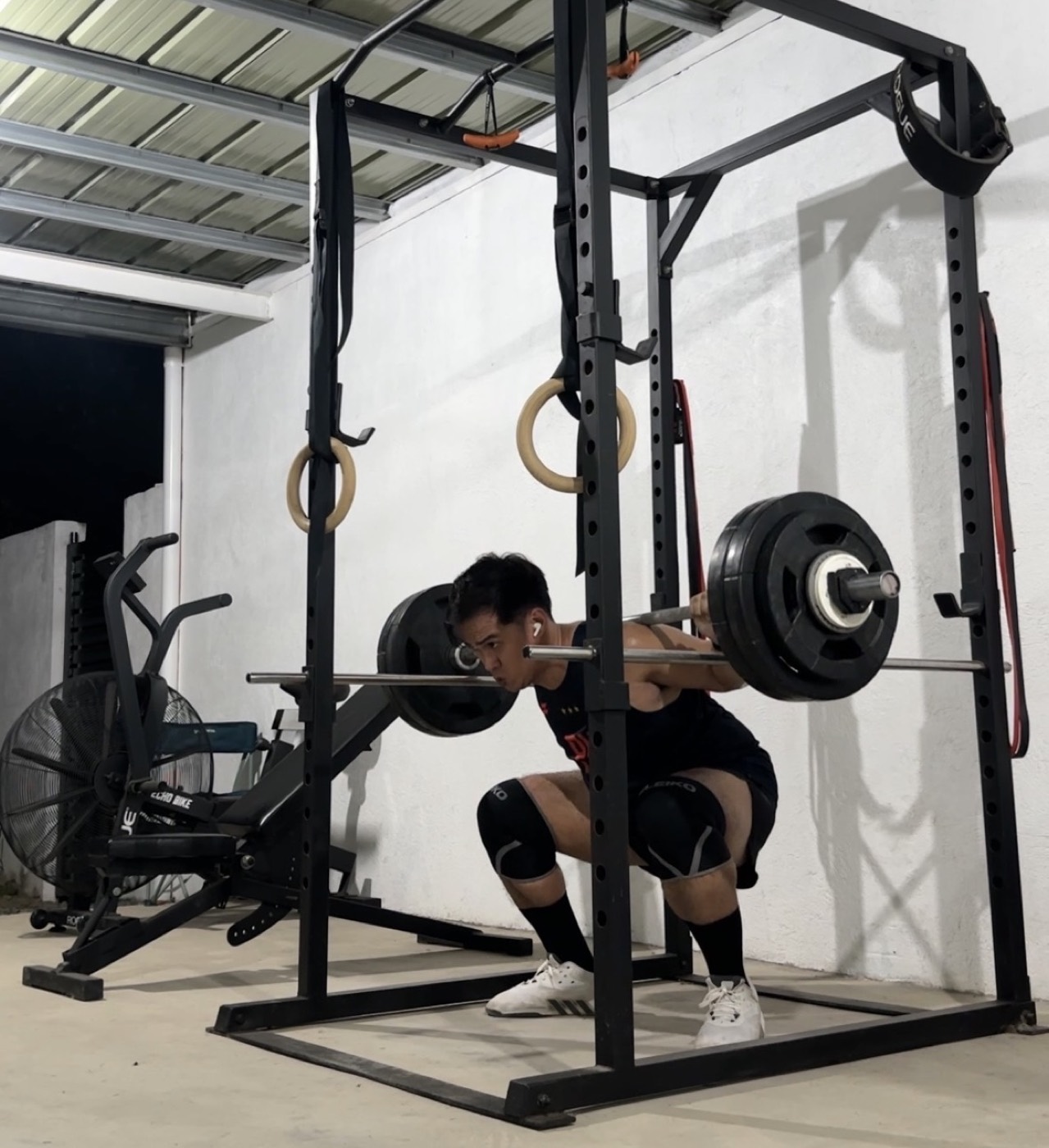
I work alone by choice. Agentic systems shipped and running 24/7, several sites that earn, mostly automated, plus training four to five days a week, running and strength work. The discipline is the same in both: a simple system, repeated, tracked. You don't win on race day. You win in the boring miles nobody sees. Systems compound the same way.
The same discipline runs under money. Kill debt first. Build the emergency fund before anything else gets a dollar. Live on a budget, invest what's left, stack more than one income stream. Compound interest doesn't care how you feel about it that day, it just runs, same as any good system. Faith keeps the whole thing grounded; the money was never the actual goal, just the runway.
Most of what's worked out for me was bigger than anything I planned. Ephesians 3:20 talks about a God who does more than we can ask or imagine, that's matched my own year more than any five-year plan I've written. I didn't architect the last twelve months. I showed up, did the work in front of me, and trusted the rest. Same approach going into the next one: build the system, put in the reps, stay grateful, and let the results run ahead of whatever I could've planned myself.

Here's the vision I'm building toward. Soon the execution layer (writing, localizing, optimizing) is mostly machines. Humans move up to strategy, taste, and judgment. The advantage stops being how fast you can do the work and becomes how well you can architect the thing that does it. I'm testing that on my own properties first, then bringing it to the teams I work with. I write about all of it, wins and failures, on the blog.
I don't stop at one site. Right now I'm running six, AIPriceRadar (AI tool reviews and price comparison, 25+ affiliate partners in alpha), EuroPriceDrop (deal discovery across six European markets, scaling to 30), TipidNation 2.0 (the original, rebuilt on an agentic stack), Chocobot AI (a publication on how people actually use AI to build), WebGeek (the community I started in 2009, now being rebuilt for the AI era), and BudgetDecoded (Travel Asia on a Budget: We publish the actual math — daily budgets, pass comparisons, transit costs, and verified activity prices, country by country, updated monthly). Same system, six different tests of where it holds.
I didn't set out to build agents. I set out to stop being the bottleneck.
WebGeek taught me community. Celsius taught me infrastructure at real scale, I joined as employee #4, before there was a product, and left after we'd built the MarTech stack for 800+ people and roughly 2 million users.
Then I went back to running my own sites, and hit the same wall everyone hits: I was the bottleneck. Every article, every localized page, every campaign tweak ran through me. Growth was capped at how many hours I had, not how good the idea was.
The fix wasn't working more hours. It was building the thing that worked the hours for me. That's the whole bet this site is built on.
A few rules I don't break
These aren't slogans. They're the lessons that survived after enough things broke.
Systems over campaigns
A campaign is a one-off. A system runs again next week without me. I build the engine, not the single output it produces.
Automate the work, never the judgment
If a task is repeatable, it goes to AI. If it needs taste or a decision with my name on it, I keep it. Nothing publishes unreviewed.
Simple beats clever
A small toolset I fully use beats a big one I half-use. Every flashy app I added on top eventually became overhead I deleted.
AI-native from day one
AI isn't a feature you bolt on. The systems I build are designed around autonomous agents from the start, not retrofitted later.
Measure, then trust it
Intuition picks the direction; data confirms it. It's RPE for growth, conversion rate, lifetime value, the honest number. I'd rather log a boring metric than argue with myself.
Build like an owner
I run my own sites, so I think in flywheels and compounding, not quarters. If a thing won't matter in a year, it rarely earns my time today.
What I've actually built
Real systems, real numbers, across crypto, fintech, startups, affiliate, and the communities in between.
I run an AI-native affiliate platform for the Philippine market, and I built the entire content and automation stack myself.
- Content pipelines that cut manual creation by about 80%
- End-to-end AI systems for articles, landing pages, and promos
- Agentic workflows for research, competitive analysis, and deal intelligence
- Multi-country localization shipping pages across 80+ markets
- Automated deal detection and content cycles for seasonal sales
I led the marketing technology build for a global crypto-fintech platform serving millions of users.
- Designed the CRM, lifecycle automation, and segmentation architecture
- Optimized paid acquisition across Google, Meta, and Apple Search Ads
- Built analytics infrastructure and dashboards for real-time visibility
- Automated promo campaigns to lift conversion and lower CAC
- Ran multi-channel attribution for data-driven budget allocation
I built one of the Philippines' largest tech and developer communities from zero.
- Grew it to thousands of members across the PH tech ecosystem
- Partnered with Microsoft, GitHub, Accenture, Smart, and Globe
- Made WebGeek a home base for PH developers and founders
What I'm testing right now
The front edge of applied AI, tools and systems I'm actually running across growth, content, and revenue ops, not just reading about.
AI-powered growth & content systems
Multi-property publishing pipelines (n8n, Claude, Astro) that take a topic from research to published post to social distribution with almost no manual touch. The goal: content output that compounds without compounding headcount.
Agent protocols for MarTech stacks
MCP and tool standards that let AI agents plug straight into CMS, analytics, and affiliate platforms through one shared interface, instead of one-off API glue code per integration.
Agentic workflows for solo-scale operations
Claude Code and agent-driven builds for shipping affiliate sites, PRDs, and internal tooling faster. AI as the execution engine for a one-person team running multiple revenue properties.
Guardrails for autonomous content & growth ops
Architecture that keeps AI-generated content, pricing data, and affiliate copy accurate and on-brand, hallucination checks, sourcing discipline, a human gate before anything ships.
The boring miles
Outside the screen I train four to five days a week, running and strength work, Starting Strength. Same belief runs through both: you don't win on race day, you win in the boring miles that compound. Five years of this by now. The fitness comes and goes with the season; the discipline underneath it hasn't moved once.

I read constantly and write in public about what I build. The best way to actually understand a system is to ship it, then explain it, writing forces the gaps in your own thinking onto the page, where you can't ignore them anymore. Most of what ends up on the blog started as a note to myself, half-convinced I was wrong about it.
One line from a book I read young stuck harder than it should have: everyone gets the same 24 hours Einstein did. I didn't have the vocabulary yet to explain why that mattered, but it's probably the actual reason I kept saying yes to projects instead of waiting for permission.
Consistency beats intensity, in fitness, in content, and in every system I design. A campaign that runs once wins the week. A system that runs quietly for a year wins the year. I'd rather own the second one, even though nobody claps for it.
If you're building something similar, I'd like to hear about it.
Most of what's on this page happened because I was trying to solve my own bottleneck. If you're stuck at the same wall (too much manual work standing between a good idea and it shipping) that's the conversation worth having.